Contour
Using AI to empower creatives, not replace them.
I explored how AI could empower creative workflows by researching user pain points, modern technology, and prototyping a tool to bridge ideas and visuals.
5 minute read
Role
Product Designer
Context
Concept · Passion Project
Timeline
October 2025
Background + Goal
Contour began as a way to reimagine AI as a creative partner.
I noticed how AI was being used to replace creatives in industries like film, photography, and graphic design, and wanted to explore how it could instead support them.
Research
I interviewed various artists to identify where AI-use could assist their creative process.
I found a unique shared frustration: finding consistent visual references was time-consuming and often led to endless, imprecise searching.
I conducted several user interviews via Zoom
Opportunity
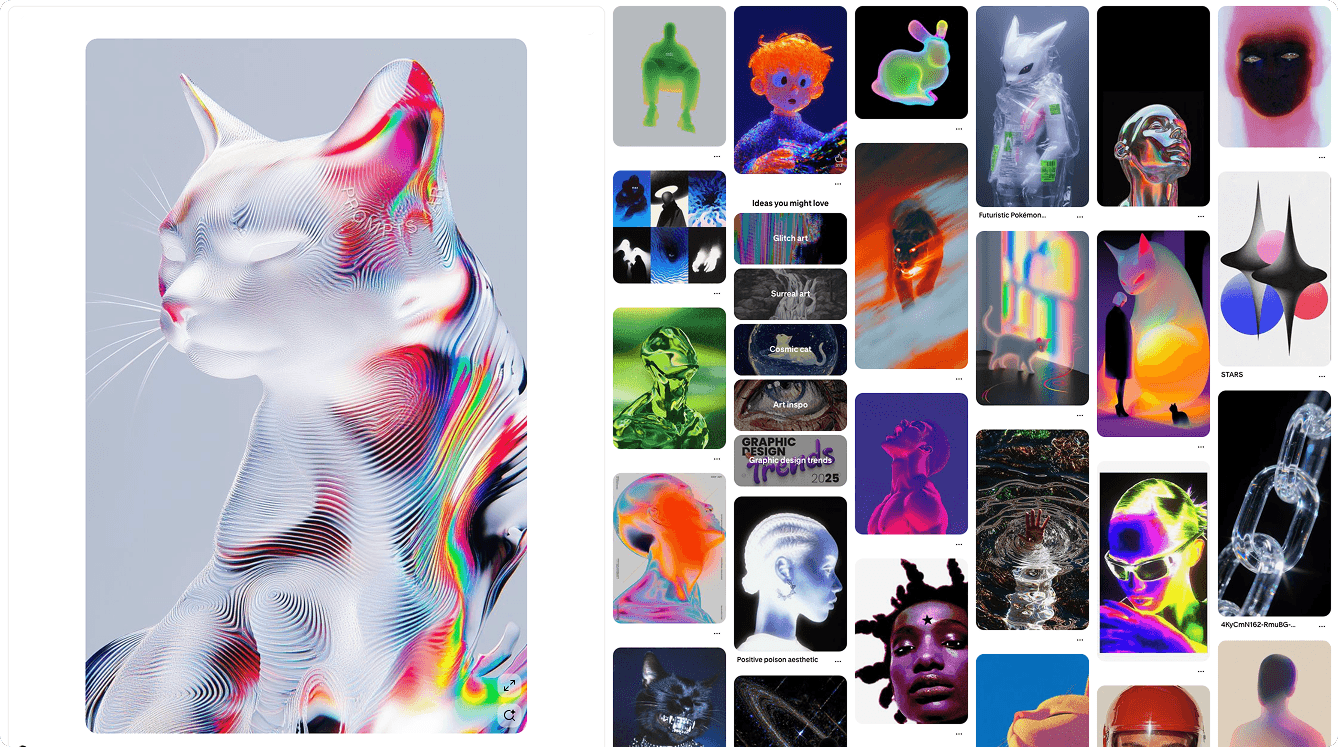
Current visual search tools can’t understand why an image feels "right."
Platforms like Pinterest or Google Images show “related” visuals, but users can’t refine results based on deeper perceptual qualities.
Solution
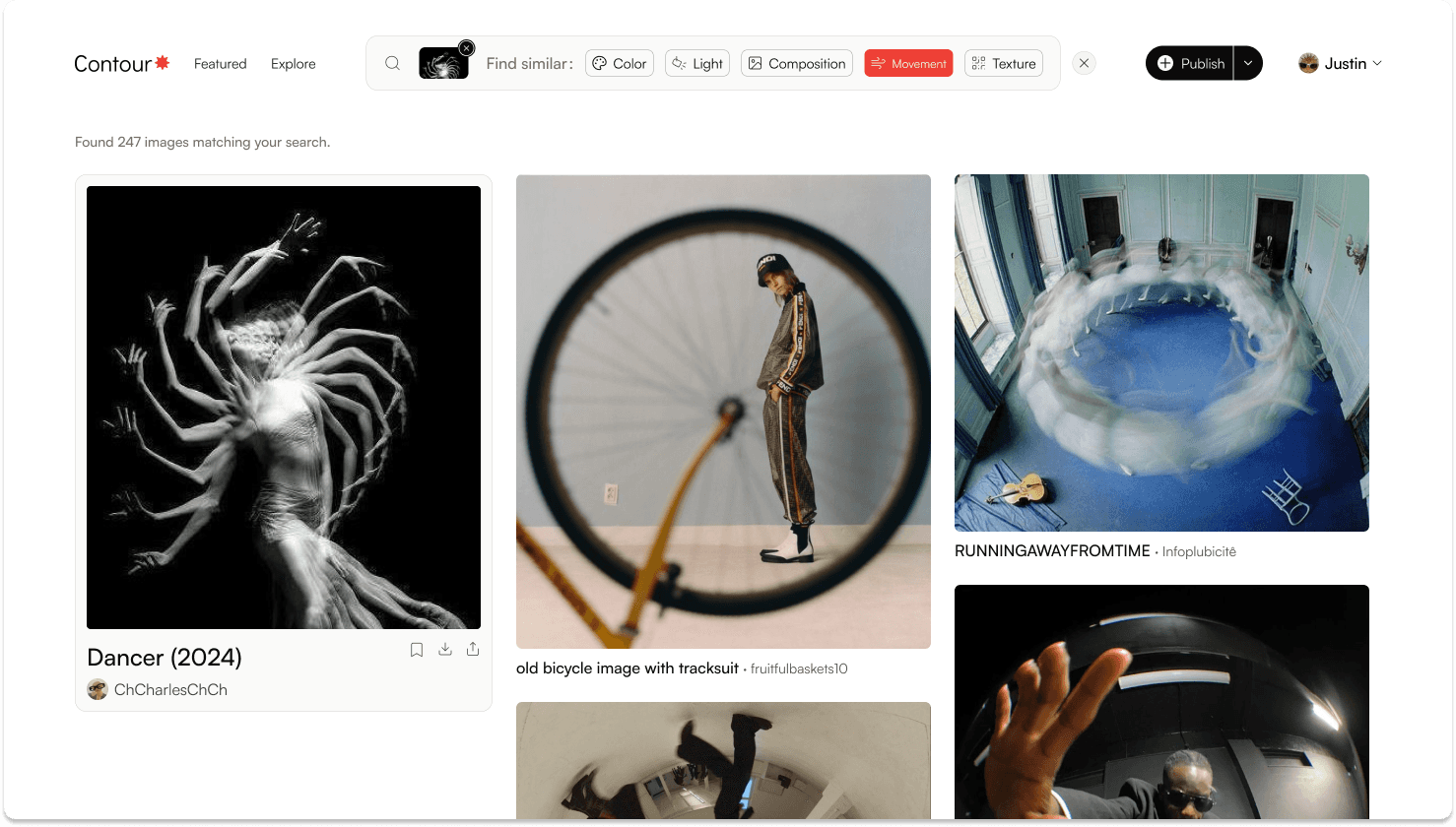
Contour is an AI-powered search platform that helps creatives find images by what they mean.
The tool lets users upload an image or reference and find visually similar results based on inferred categories.
How It (May) Work
Built on modern AI vision models that can understand visual semantics, style, and mood.
Using modern computer vision and embedding models (CLIP, Segment Anything, ImageBind), Contour would analyze the visual features of an input image and compare them to a large indexed database.
These embeddings ideally would let the system rank results by perceptual similarity, i.e. searching by “feel” instead of text. (Reference)
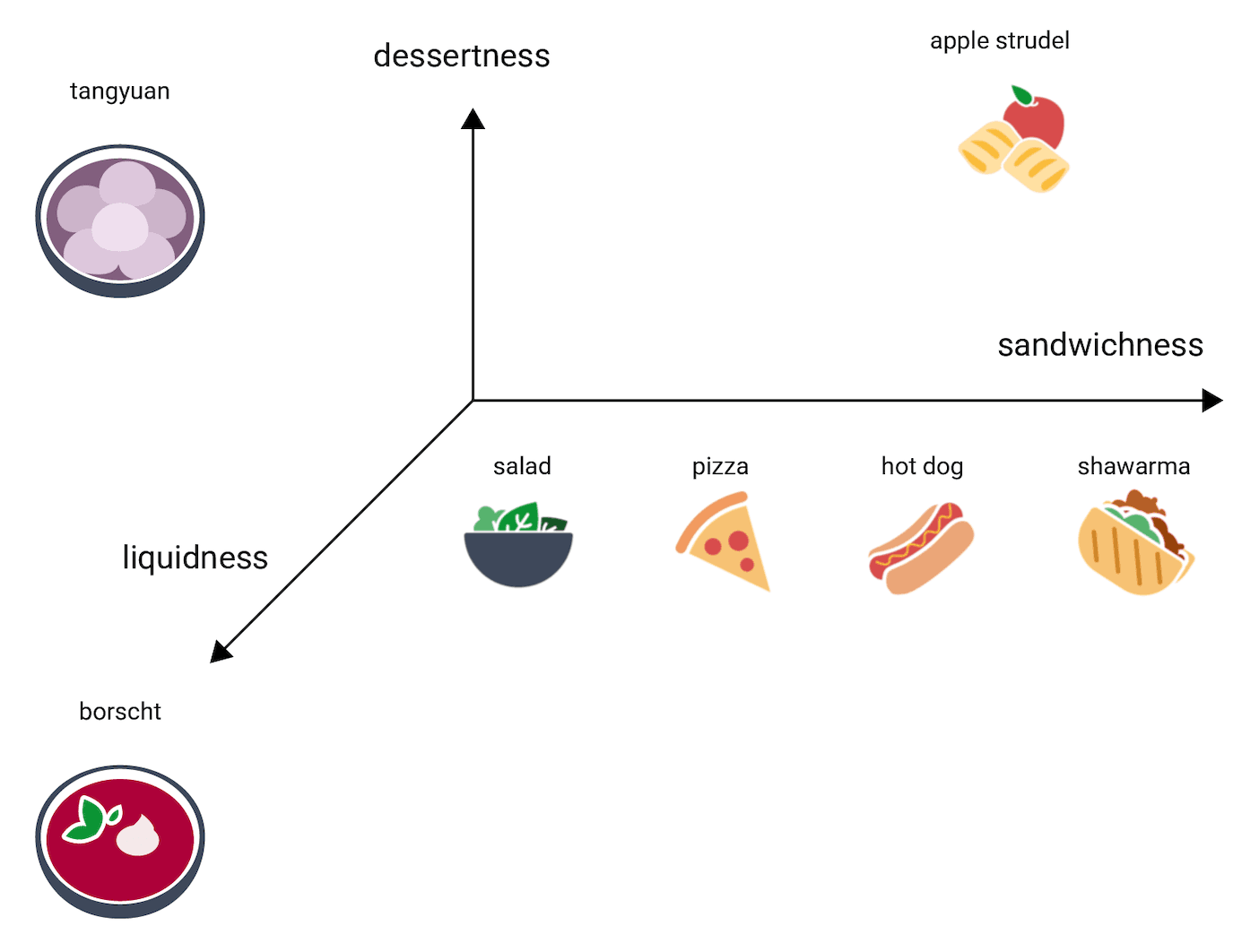
Axes of "dessertness", "liquidness", and "sandwichness", embeddings. Used to represent complex data in a shared “map” where similar things are placed close together, allowing the model to recognize complex image relationships and "meaning".
User Feedback + Reflection
100% of participants loved the idea of a tool that amplifies their vision rather than automating it. 😎
People responded positively to how Contour used AI as a support tool instead of a replacement, reinforcing my belief that human creativity is a superpower that should be emboldened, and not displaced!