
PlaySmart
Scaling a coaching platform to 35+ schools and 300+ athletes.
This project has secured thousands in seed funding and is currently being beta-tested in 35+ local high schools.
Role
Context
Hackathon → Startup
Timeline
Nov 2024 - Apr 2025
Problem
Youth competitive sports run on gut instinct.
Players and parents are left guessing about what needs improvement
New coaches can't connect practice routines to game performance
Progress goes unnoticed because nobody is tracking patterns over time
"[Basketball practice] is like paying for a tutor but never receiving a report card."
— Parent of a varsity player

Competitive Landscape
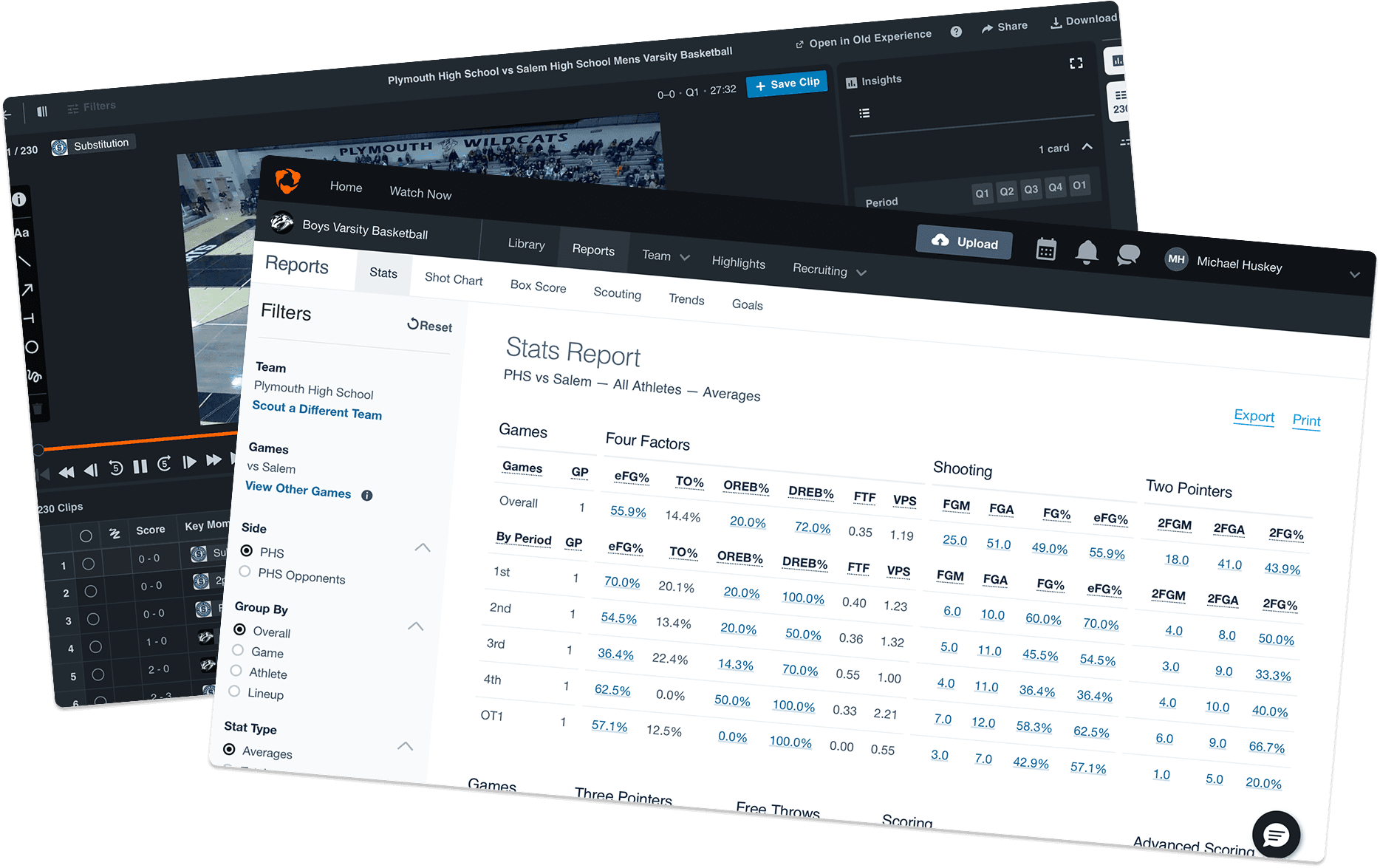
Platforms like Hudl give coaches access to game stats and footage, but our research revealed a disconnect.
Coaches believed they had enough data, but most found it unusable because they lacked the time or expertise to truly analyze it.
Design Principles
Based on our research, I set three rules for every screen:
Answers in seconds, not minutes
Coaches check this between drills. If a screen required interpretation, it was too complex.
Connect the dots automatically
Every visual needed to surface an insight or recommendation.
Map to what coaches already do
The product had to fit into existing coaching workflows, not replace them.
Exploration
I explored several approaches for surfacing player and team progress.
Throughout this process, coaches told us they didn't think in terms of raw numbers, they thought in terms of "what can I do to make this kid the best athlete possible?"
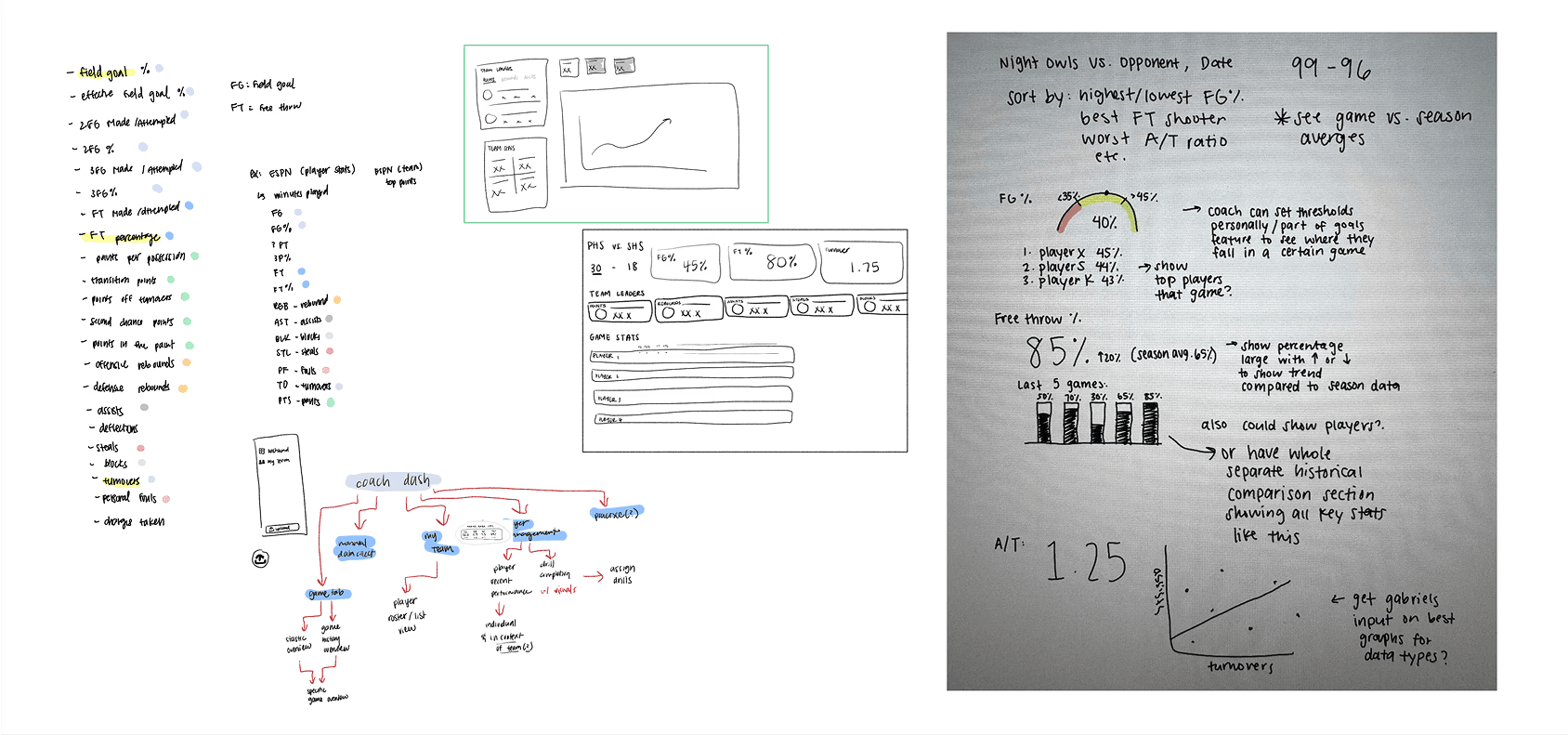
Early sketches of information architecture and data presentation.
Final Design
Each player's performance is broken into coach-set goals tracked through visible milestones.
This view gives coaches an at-a-glance understanding of individual growth without requiring them to interpret raw stats.
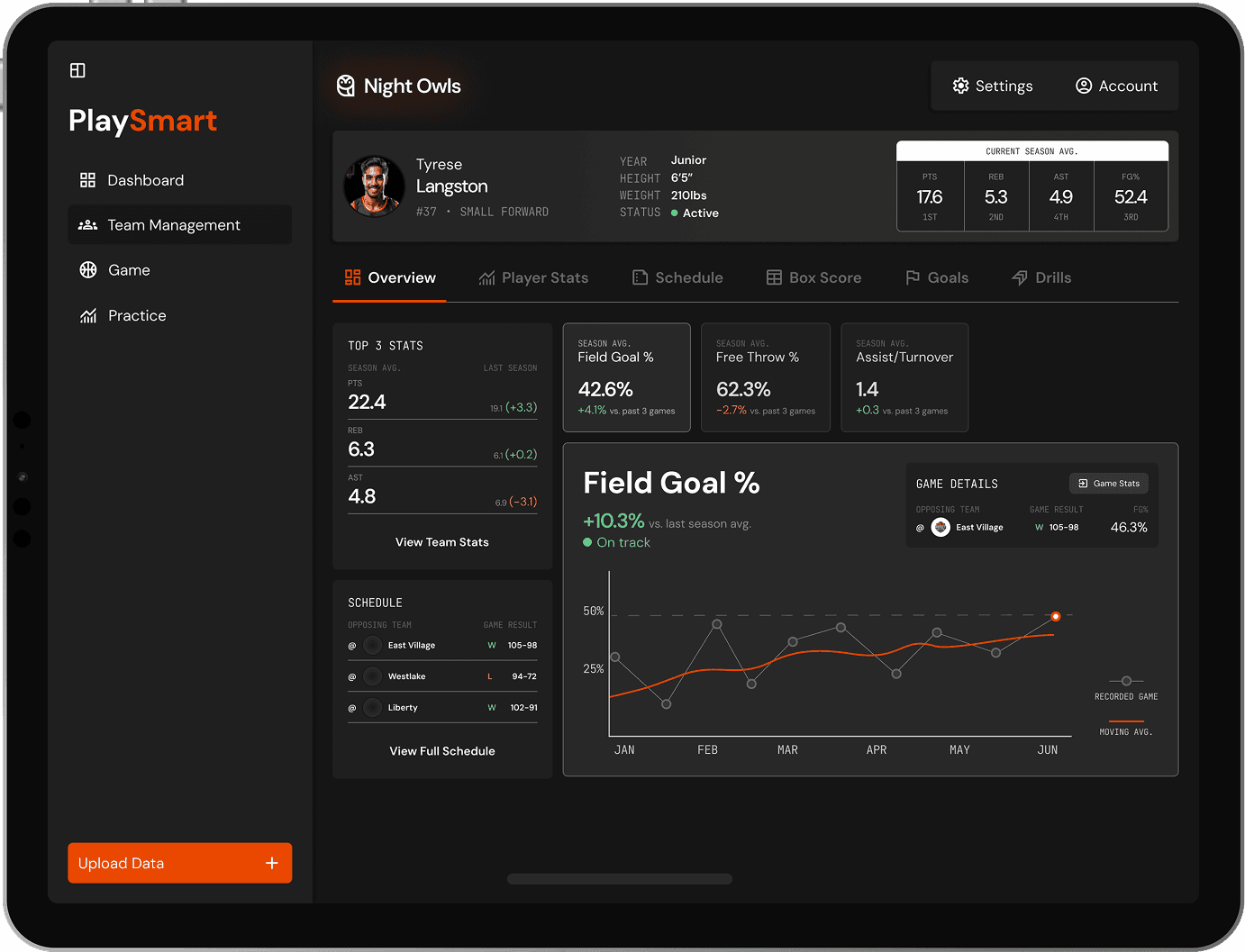
Player stats are aggregated into an interactive, sortable database.
Coaches can compare performance game-to-game and identify trends over time, while still being able to find specific statistics.
Skill-specific drill tracking with dynamic performance table.
AI-generated recommendations translate raw performance data into specific, actionable coaching suggestions.
For newer coaches especially, this surfaces what's driving results so they can adjust practice plans with confidence.
AI recommendations based on athlete and team performance data
Validation
Early feedback from coaches confirmed that the milestone-based progress view was the most useful feature.
Coaches said they cut film review time in half and could more confidently run their practices, which was the core behavior change we were designing for.
Coach walking through and reviewing an alpha build
Reflection
Every design decision that reduced cognitive load tested better than ones that added information, even when that information was technically useful.
As a founding designer, I got to make high-level decisions on what to build, focusing on features that could grow with the platform.
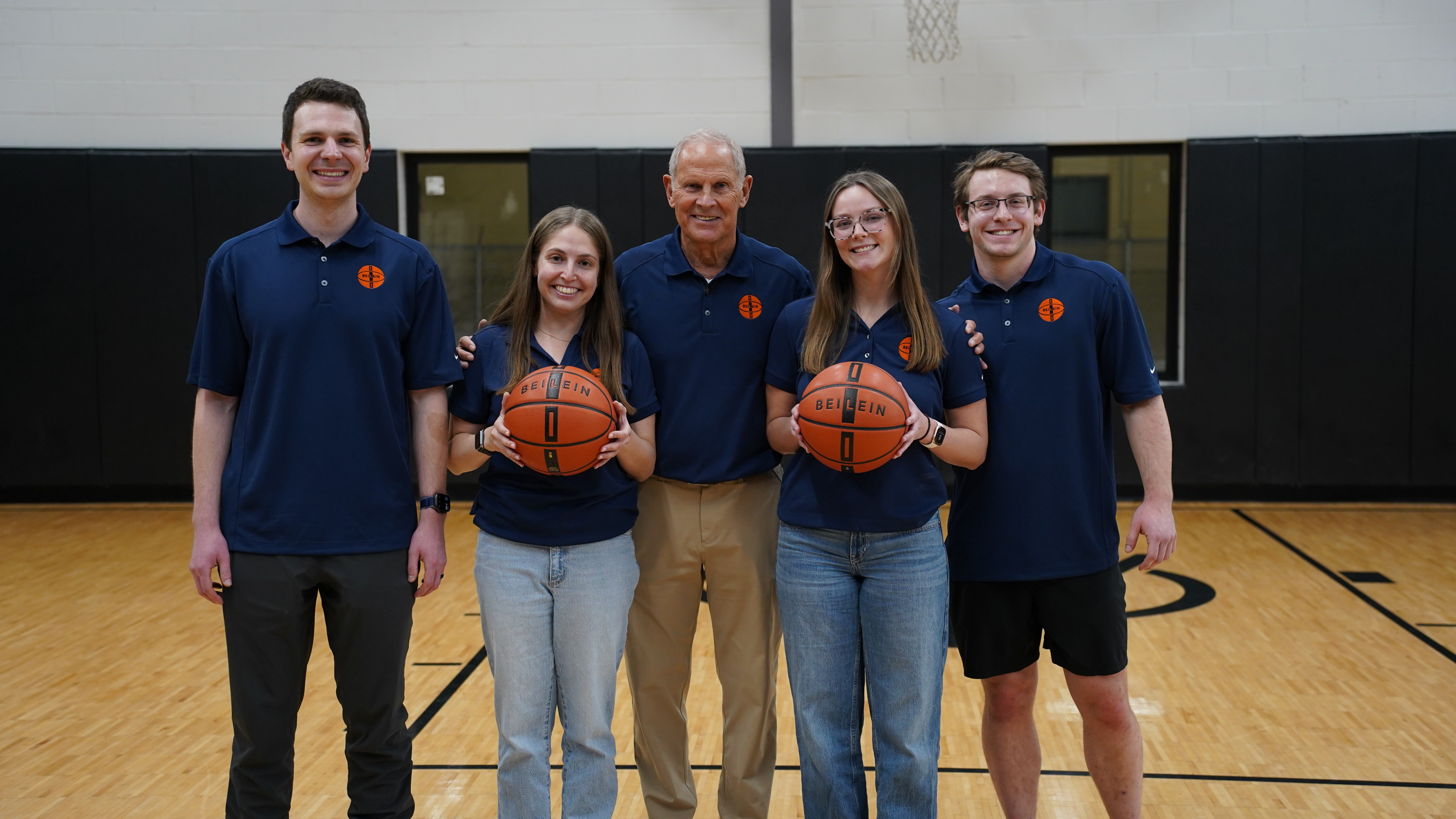
Introducing PlaySmart to the University of Michigan's former coach John Beilein.

Contact me: jusmas@umich.edu