
Handshake
Redesigning the weekly job digest to increase student engagement by ~22%.
Role
Product Designer
Context
Internship
Timeline
Jun 2025 - Aug 2025
Problem
The Weekly Job Digest reaches 7M+ students, but it had become inbox noise with low open rate and clicks.
Before I could redesign the email, I had to define the metric. My first task was establishing what a successful digest actually looked like.
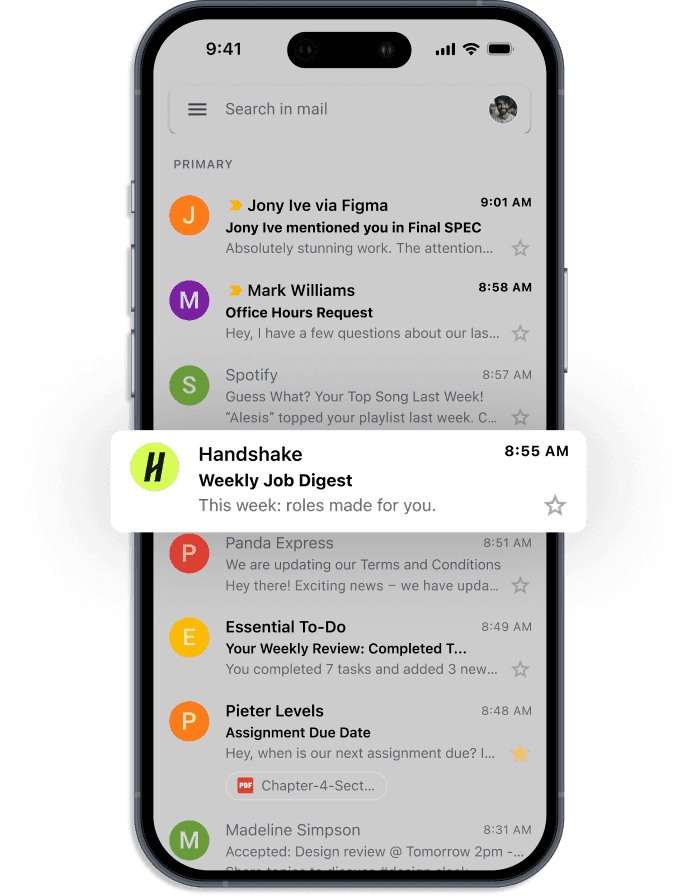
Student’s inbox showing the Job Digest email competing with other emails.
Research
I audited job digest emails from competitors and re-engagement emails from other industries to identify what drove opens and clicks.
Comparing them side by side shifted my framing from a job delivery email to a re-engagement tool designed to pull students back into Handshake as a whole.
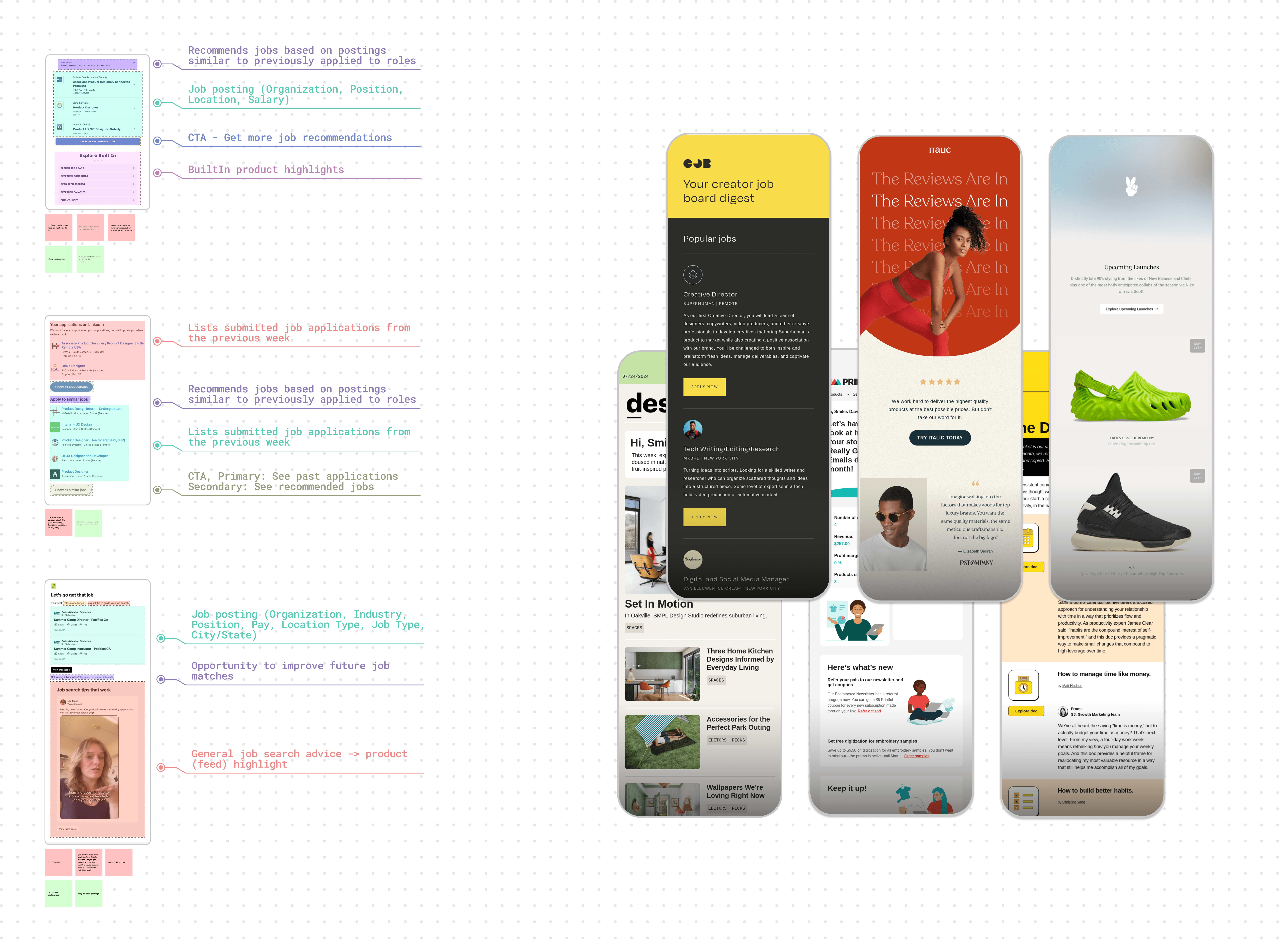
Comparison view of reference emails, showing highlighted features.
Findings
The strongest digests reduced friction and helped users decide in seconds whether an email was worth their time.
Three patterns stood out specific to our audience:
Scannability over density
Shorter cards with front-loaded info outperform detailed listings.
Qualification signals
Showing why a user received an email builds trust faster than generic recommendations.
Clear CTAs
Emails with one dominant action outperformed those with multiple competing links.
Hypothesis
I built a behavioral messaging matrix mapping our student personas to their stage in the user journey and known motivational levers.
The goal was to identify which message would move each student type forward across the full product lifecycle from onboarding to re-engagement.
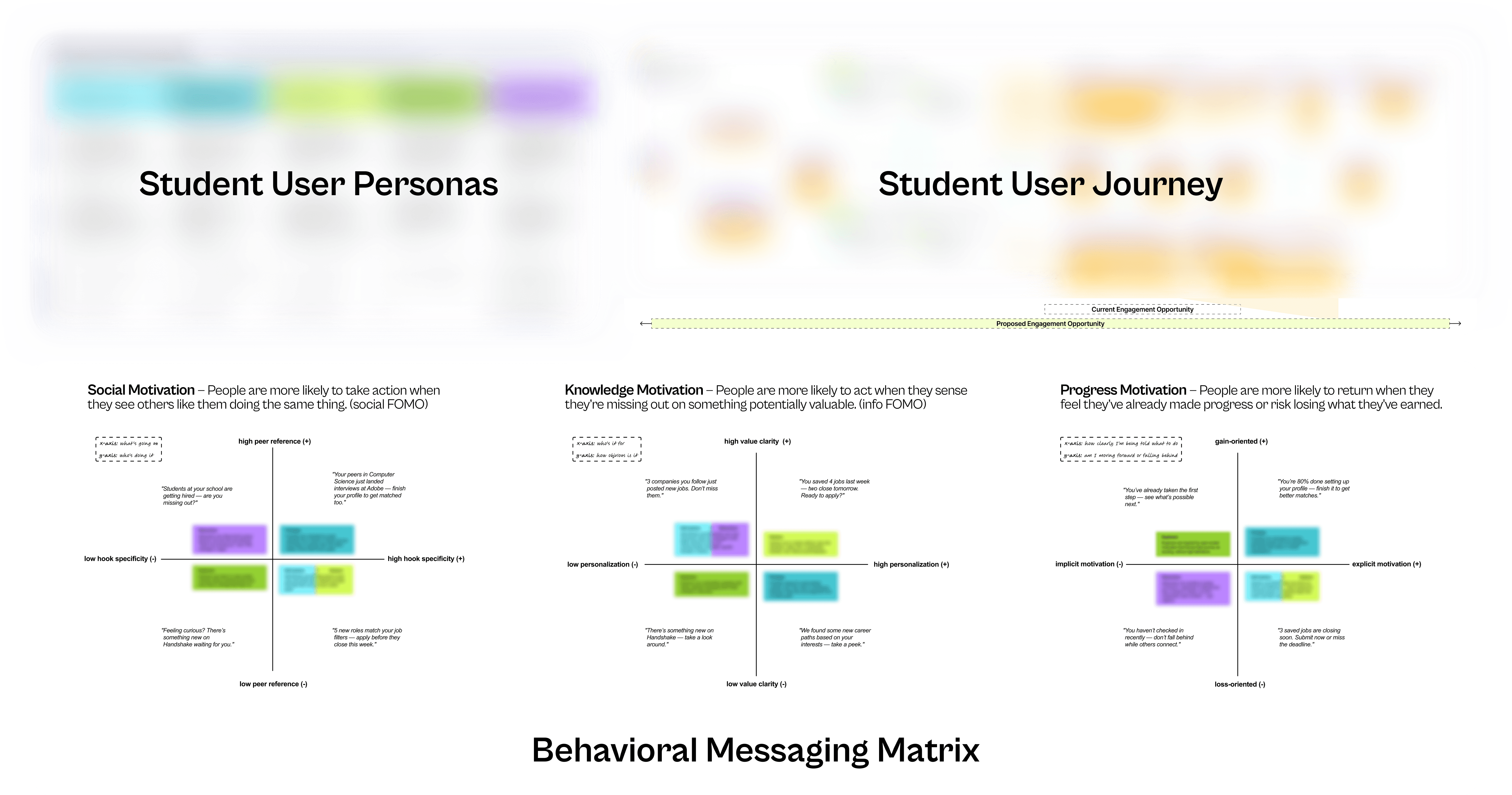
Blurred student personas and journey map alongside the behavioral messaging matrix.
Ideation
My initial proposal was a set of emails tailored to each journey stage, targeting the specific reasons students dropped off.
However, our system couldn't segment at that granularity, and the added send volume risked doing more harm than good. I pivoted to making the existing digest smarter by surfacing job details that addressed the trust and relevance gaps I found in research and using data we already had.
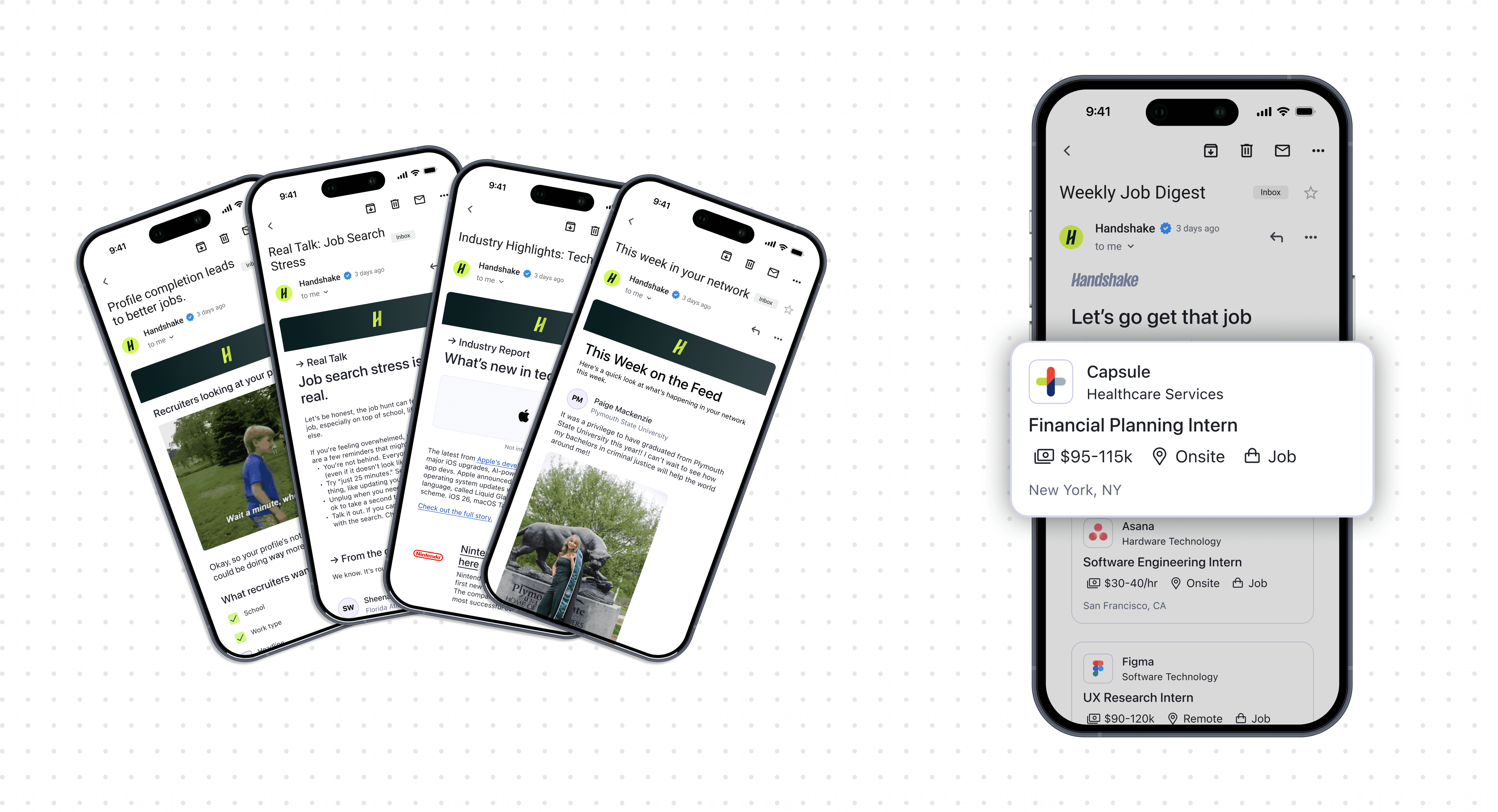
Mockups of personalized re-engagement emails.
Design Exploration
I developed various job card variations, then narrowed to three directions for testing.
Each variant mapped to a hypothesis: does engagement come from the content itself, the context around a role, or showing students why they qualified?
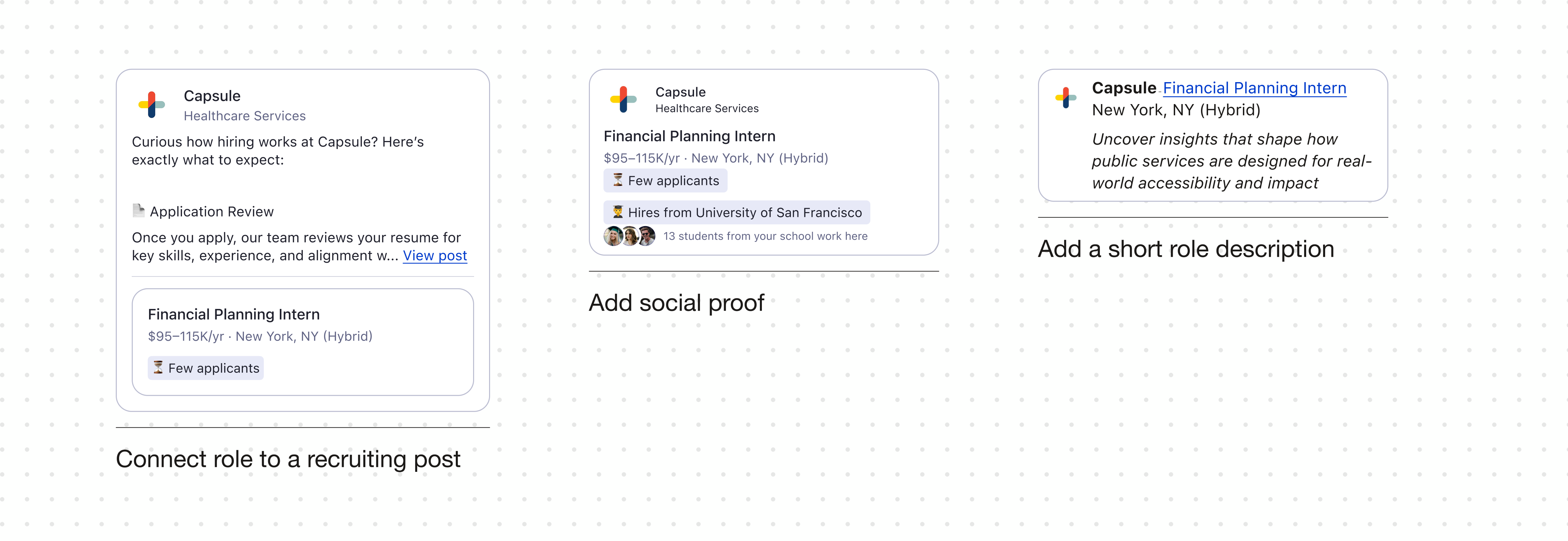
Multiple card and plaintext mockups with varying information.
UX Research
I ran A/B tests and surveys with 100+ students, rating each variant on trust, clarity, relevance, and likelihood to click.
Key results:
Qualification signals made emails feel more credible
Role descriptions helped students feel confident exploring roles outside their usual searches.
Plaintext control improved readability, suggesting that visual simplicity itself was a lever.
Final Design
I combined the strongest elements into a hybrid card design that raised perceived value by ~22% over the original.
The design balanced what students told us they needed with what our system could actually deliver.
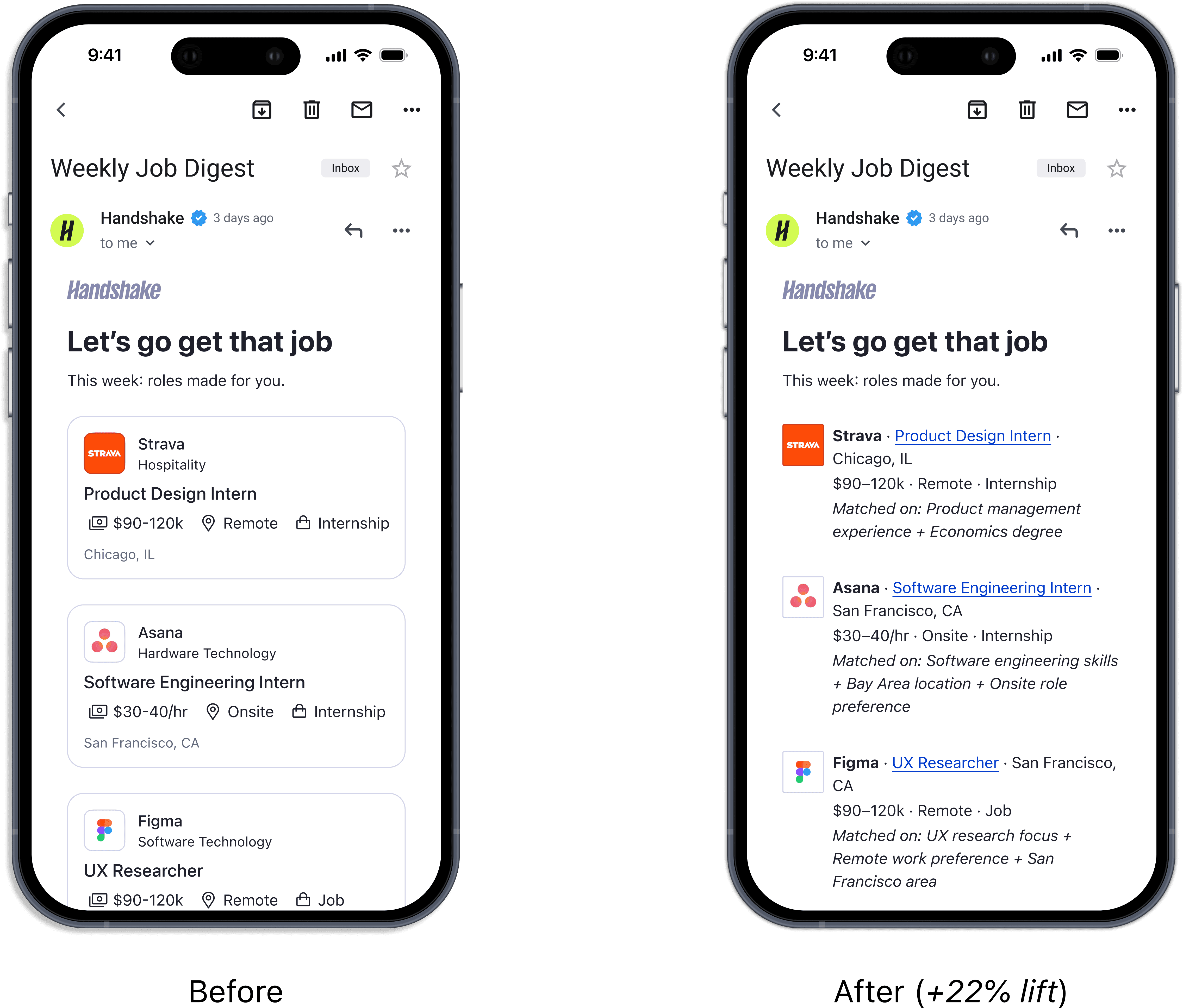
Old job digest email (left) vs updated job digest email with new job cards (right).
Reflection
The biggest lesson was learning when to let a good idea die.
The personalized email system was the more ambitious solution, but the scoped version could be shipped faster, used existing infrastructure, and still delivered results.
Knowing when "good enough to ship" beats "perfect in theory" is what I'm carrying forward from this project.

Contact me: jusmas@umich.edu